



Chronic inflammation of the prostate gland occurs in men of any age.In most cases, the catalyst is an infectious factor: Trichomonas, staphylococci and gonococci.Bacteria entering the body cause inflammation of the urethral canal and the prostate itself.
The chronic form of prostatitis is often asymptomatic.The disease itself is determined only after the transition to the acute form.The late diagnosis is also explained by the fact that the first symptoms of chronic prostatitis in men are often ignored.
Statistics show a constant "rejuvenation" of the disease.Patients in their 30s are turning to urologists more and more often.
Chronic prostatitis - what is it?
The prostate gland is located below the bladder.The main functions are limited to the protection of the vesica urinaria from the penetration of seminal fluid and the production of the secretion of the prostate, which is a necessary component of male sperm.The inflammation of the glandular tissue caused by infection, congestion and other factors gradually becomes permanent.
Chronic prostatitis leads to degenerative changes.The structure of the tissues is gradually deformed.Stones often appear in the channels against the background of inflammation.Certain types of prostatitis can lead to cancer.
An international classification system has been developed to facilitate the differentiation of different prostate diseases.
Chronic prostatitis - causes
It is generally accepted that inflammation of the prostate is caused by two main factors: bacterial and abacterial.
The first is related to the entry of pathogens and infections into the patient's body.Most often, the catalyst is sexually transmitted bacteria.
The second cause of occurrence is not related to an infectious agent.Catalysts of inflammation can be:
- Hypothermia of the body.
- Hormonal imbalance related to aging and irregular sex life.
- Bad habits.
- Injury to the pelvic organs.
- Stagnation caused by metabolic disorders and a sedentary lifestyle.
After diagnosing prostatitis, the underlying cause of chronic prostatitis must be determined.The course of therapy is prescribed based on what exactly caused the inflammation.Bacterial and non-infectious prostatitis are treated differently.
Urologists name a number of additional factors that aggravate the situation and affect the serious course of the disease:
- Sexual abstinence.
- Weak ejaculation (choosing interrupted sexual intercourse as a contraceptive method).
- Tension.
- Bad habits - alcohol consumption and smoking.
- Bad nutrition.
- Inflammatory diseases in the past.Chronic prostatitis is often caused by urethritis and cystitis.
The inflammation is accompanied by destructive changes in the prostate gland, which allows the disease to be classified into several categories.
Classification of chronic inflammation of the prostate
Types of prostatitis have been given their own ICD-10 code - N41.A separate classification B95-B97 is used to clarify the diagnosis and distinguish catalyst infection.The symptom evaluation scale divides the disease into several groups and subgroups:
- I - acute inflammation, accompanied by a sharp rise in temperature and fever.
- II - chronic prostatitis caused by an infectious factor.
- Class III includes a disease in which pelvic pain syndrome is manifested.It is customary to distinguish two subgroups:
- IIIA - there are signs of an inflammatory process.A low-grade fever remains.
- IIIB - no inflammation.
- IV - prostatitis, in which there are no symptomatic manifestations.Deviations from the norm are detected exclusively with instrumental diagnostic methods.
According to the ICD code:
- N41.1 is diagnosed with chronic prostatitis.
- N41.8 Inflammatory diseases of the prostate.
- N41.9 exact diagnosis was not made.
How are the symptoms of chronic prostatitis manifested
The first signs of chronic prostatitis in men appear in the advanced stage of the disease.Early development often has no clinical manifestations.Symptoms, even if present, are transient, short-term and of low intensity.
According to the clinical manifestations, we distinguish three stages of the development of prostatitis:
- Initial indirect signs of chronic prostatitis - as already mentioned, the beginning of the disease is not expressed by clearly distinguishable symptoms.Manifestations are subtle or absent.Signs to look out for: burning sensation during ejaculation, loss of potency, painful urination.
- Secondary signs of chronic inflammation of the prostate - at this stage, pathological changes occur in the structure of the tissues, the appearance of scar-like formations and a decrease in urogenital function.The stage is characterized by a sharp deterioration of potency and urination, increased sweating, severe pain in the pelvic area, lumbar spine and scrotum.
- Signs of advanced disease - the prostate stops functioning normally.Healthy tissues begin metamorphosis.The size of the gland increases.Blood and pus appear in the urine, there is a constant feeling of incomplete emptying of the bladder, trips to the toilet at night become more frequent.Erectile function is reduced to such an extent that we can speak of complete sexual impotence.
In addition to the symptoms characteristic of each stage of development, there are general signs that appear during the entire course of the disease.
Pain syndrome
Chronic prostatitis has pronounced symptoms in the late stages of development.Its typical clinical manifestation is pain of severe intensity, which does not go away on its own and requires the use of painkillers and antispasmodics.
The pain syndrome accompanies the entire period of the development of the disease.During the primary signs of prostatitis, the discomfort and burning sensation in the urethra are of low intensity and therefore often ignored.Pain is often falsely attributed to radiculitis or fatigue.After taking a pain reliever or antispasmodic, the symptom usually goes away.
Over time, the clinical picture becomes more intense.The pain syndrome manifests itself more intensively and persists even after taking painkillers.Unpleasant sensations accompany every urination, defecation and ejaculation.
The pain radiates from the spine to the scrotum, sometimes to the limbs, accompanied by cramps and numbness.Rashes, itching and burning of tissues in the prostate and genital area are the body's normal response to internal inflammation.
Temperature rise
Chronic inflammation of the prostate gland in acute form is accompanied by heat and fever.The temperature rises sharply, reaching 39-40°.The indicators are stable.The body temperature does not decrease even after taking antipyretics.
Slow prostatitis is characterized by a low-grade fever.Constant indicators of chronic inflammation, within 37-37.2°.

It is strictly forbidden to reduce the temperature and to take medicines independently in order to reduce external manifestations!
Dysuria
The first signs of chronic prostatitis appear in various urinary disorders.Over time, the symptoms become more intense, which helps to identify the disease.Manifestations of dysuria:
- Frequent urge to go to the toilet at night.
- A feeling of incomplete emptying of the bladder.
- Hematuria (blood in the urine), purulent discharge.
- Pain during urination.
Clinical symptoms and the intensity of their manifestation directly affect the diagnosis and require mandatory further research.The symptoms may indicate other inflammatory diseases of the urinary system, hyperplasia and oncology.
Functional disorders of the genital organs
Chronic prostatitis leads to the appearance of scar tissue, which impairs blood supply.The lack of nutrients leads to the following manifestations:
- Decreased potency - sexual disorders can be observed in case of chronic prostatitis.One of the characteristic symptoms is a normal erection, which decreases sharply during sexual intercourse.In the advanced stage, stable potency occurs.
- Infertility - after the appearance of scars in the ejaculatory ducts, sperm viability decreases.Inflammation changes the structure and composition of the ejaculate.In advanced stages, the sperm thickens and lumps appear.
- Pain during sexual intercourse - discharge from the urethral canal is observed.Discomfort and painful symptoms occur during sexual intercourse, especially during ejaculation.Psychosomatic reasons often lead to the patient's permanent impotence.

The main symptoms of chronic prostatitis are: pain, elevated body temperature, dysuria, dysfunction of the genital organs.When establishing the diagnosis, the intensity and duration of the period since the onset of clinical symptoms, as well as the associated symptoms, are taken into account.
How can chronic inflammation of the prostate be detected?
There are no symptoms of prostatitis that can accurately distinguish the disease.Some disorders of the urogenital system have similar symptoms.An accurate diagnosis can only be made after a complete examination of the patient, including laboratory tests and methods of instrumental detection of the disease.
Upon suspicion of disorders in the functioning of the pelvic organs, the urologist prescribes a mandatory rectal examination.If tissue changes are detected by palpation, more laboratory tests are prescribed.
Laboratory research methods
Clinical blood and urine tests distinguish the presence of an inflammatory process and can often explain the catalyst for the development of the disease.When making a diagnosis, additional information will be needed from the results of the following laboratory tests:
- Cytological and bacteriological analysis of urine.The PSA level was determined.The protein level rises sharply with inflammation of the glandular tissue.
- Taking a smear from the urethra.
- Microscopic examination of the prostate secretion - based on the results, functional disorders of the prostate gland are determined.Distinguish cancer from chronic tissue inflammation.Prostate discharge is prohibited during the acute period of the disease, which is accompanied by high body temperature, aggravation of hemorrhoids, or cracks in the anus.
- Test for STIs (sexually transmitted infections) - one of the common catalysts of prostatitis is pathogenic microorganisms.Trichomonas, staphylococcus and gonococcus can all cause the disease.Prostatitis develops during the active phase of bacterial growth or after the infection has healed.

Laboratory tests are mandatory elements for the diagnosis of prostatitis and the selection of the subsequent treatment method.
Instrumental detection of the disease
There are three main examination methods for prostatitis.All instrumental diagnostic methods provide information about changes in the structure of glandular tissue and have their own indications and contraindications:
- Tomography - MRI is often prescribed to diagnose chronic prostatitis.The examination allows obtaining a layer-by-layer image of the prostate.MRI signals accurately indicate chronic inflammation and signal the beginning of tissue transformation into malignancy.Magnetic resonance technology is completely harmless, but it has contraindications, since it is not possible to study patients with pacemakers, metal clips and shunts (left during surgical procedures).
- Transrectal TRUS is an informative method that reliably indicates the presence of inflammation.Ultrasound signs of structural changes in the prostate according to the type of chronic prostatitis are as follows: deviations from the norm in volume and size, structure and the presence of pathological formations.Ultrasound techniques are not prescribed for acute inflammation of the rectum, the presence of cracks in the anus, or hemorrhoids.
- The transabdominal ultrasound technique has no contraindications.The method is less informative compared to TRUS and MRI.Ultrasound signals make it difficult to determine the space of the abdominal cavity.Diagnostic results are often contradictory and require clarification.The advantage of ultrasound is the simplicity and speed of the examination.
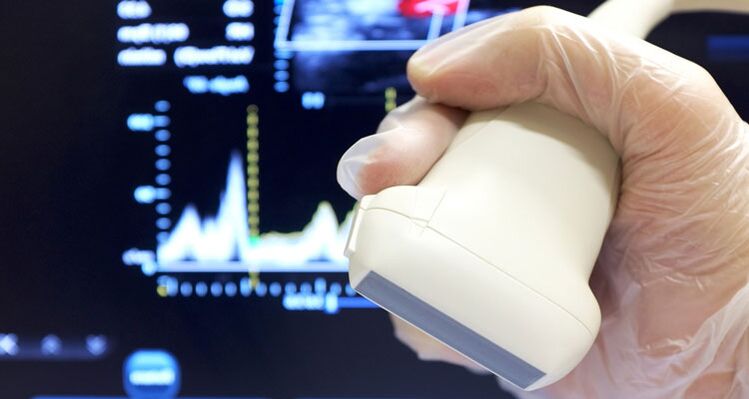
The accuracy of the echographic image depends to a large extent on the experience of the doctor performing the examination.
Differential search for the disease
After receiving the results of clinical and biochemical tests, the symptoms of chronic inflammation of the prostate are assessed.Common diagnostic standards have been developed that are valid throughout the world.
To facilitate the work of the urologist, the NIH-CPSI Symptom Index was devised, which was created in the form of a questionnaire or questionnaire.The doctor fills in the fields of the document and then makes a diagnosis.
There are computer programs that are based on the NIH-CPSI index.The doctor must fill out a questionnaire, and the system independently performs a summary assessment of the symptoms of chronic prostatitis.The effectiveness of the technique has been proven all over the world.
After calculating the results of the questionnaire, further evaluation of instrumental and clinical tests is taken into account when establishing the diagnosis: the presence of echo signs of chronic prostatitis, increased PSA level, identification of infectious markers by microscopic examination of secretions.The more data the urologist has, the more accurate the result will be.
What is dangerous in chronic prostatitis - its consequences
The consequences of chronic prostatitis in men are disorders of the functioning of the urogenital system.These are:
- Impotence.
- Acute urinary retention.
- Infertility.
Fibrous changes accompanying the advanced disease cause the development of oncology.Normal tissues degenerate into malignancy.Therefore, the prevention of functional changes in the prostate in order to prevent the development of cancer is an extremely important task for the urologist.
Intraepithelial neoplasia of the prostate, which is a precursor to oncology and fibrous changes, is taken into account when making a diagnosis.Advanced disease often leads to the need for surgical intervention: prostatectomy.
Diagnosing prostatitis and distinguishing the disease from related disorders of the pelvic organs is an important task for doctors and patients.The detection of the first symptoms depends entirely on the person himself.If you experience any discomfort while urinating, a reduced erection, or a persistent low-grade fever, this is a reason to consult a specialist immediately.Delay is dangerous!